
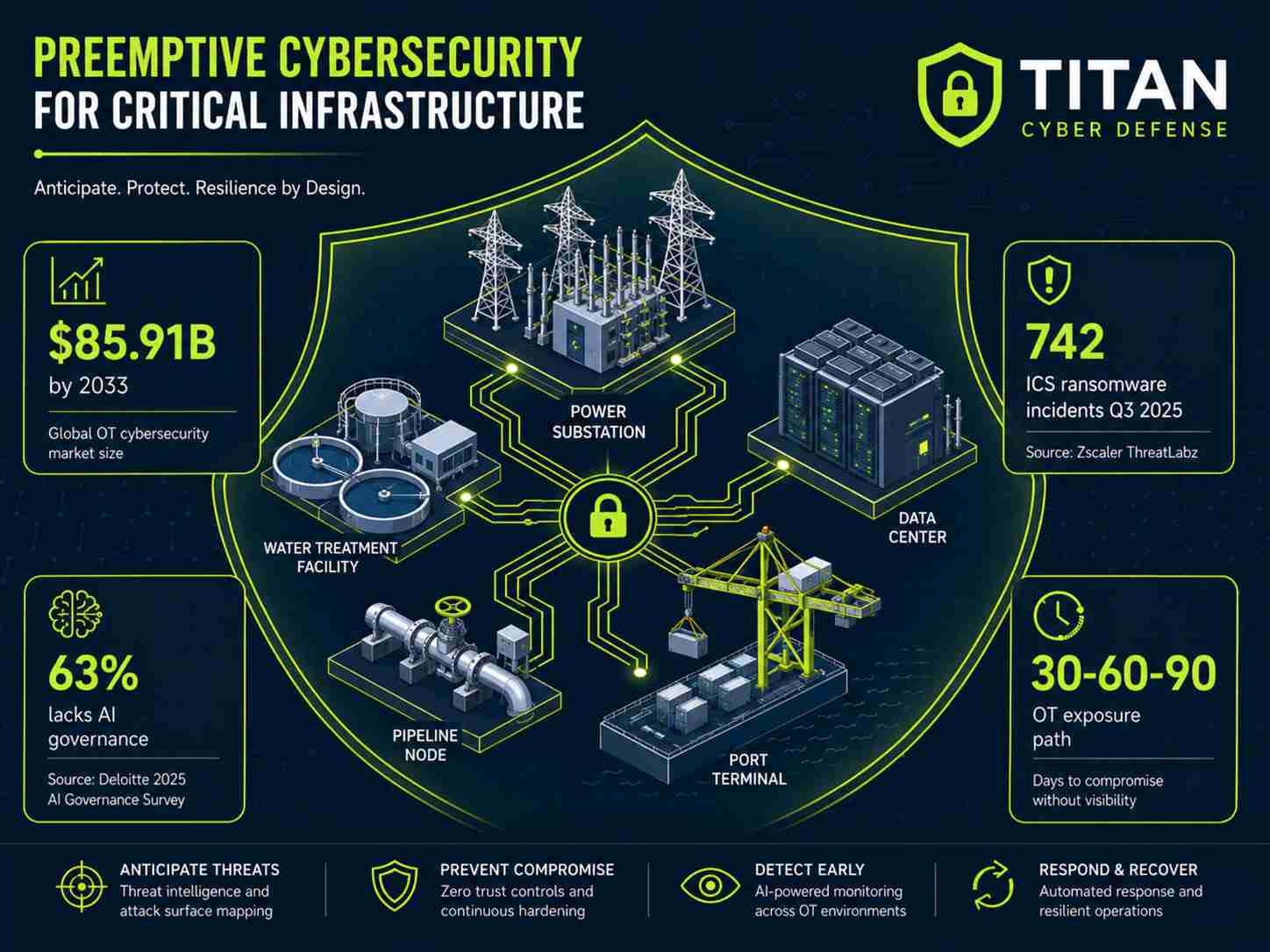
The landscape of cybersecurity for critical infrastructure is evolving rapidly, as highlighted by a recent report from BG Titan Group. The 2026 Preemptive Cyber Defense for Critical Infrastructure report emphasizes the urgent need to transition from reactive cybersecurity measures to strategies that prevent threats before they materialize. With ransomware incidents reported to the FBI exceeding 3,600 in a year, and AI-enhanced phishing comprising over 80% of social engineering attacks globally, the report underscores the necessity of integrating cybersecurity into the very design of infrastructure assets. This shift is fundamental for sectors like power, water, transport, telecom, and industrial operations, where digital resilience and operational recovery are paramount.
The report presents a stark reality: most operators of critical infrastructure continue to treat cybersecurity as an afterthought, acquiring solutions only after systems are in place or breaches occur. However, with the cybersecurity market for critical infrastructure protection expected to grow from approximately USD 56.52 billion in 2025 to about USD 85.91 billion by 2033, the focus is shifting towards resilience investment. This change is driven by factors such as increased digitalization, interconnected IT and OT systems, large-scale infrastructure projects, and heightened board-level awareness of operational resilience. The FBI noted 63 new ransomware variants in 2025 alone, with manufacturing significantly impacted, highlighting the critical need for robust, integrated cyber defenses.
BG Titan’s report identifies four converging forces that redefine the cyber threat landscape for infrastructure owners. The collapse of the perimeter has rendered previously isolated systems vulnerable due to increased connectivity via remote access and AI tools. The AI inversion indicates that AI will continue enhancing cyber intrusions’ efficiency and effectiveness. Meanwhile, regulatory pressure is mounting with the EU Cyber Resilience Act and NIS2 Directive, demanding stronger cybersecurity measures from manufacturers. Additionally, a convergence of threats means that disruptions in one sector can cascade across others, underscoring the interconnected nature of modern infrastructure.
To address these challenges, the report outlines twelve areas where operators can create value by shifting from reactive measures to proactive denial-of-opportunity approaches. These include enhancing cyber-resilient project delivery, reducing OT exposure, and implementing zero-trust edge access, among others. A 30-60-90 day strategic path provides a roadmap for immediate action, focusing on identifying vulnerabilities, removing public exposure, and validating secure access models. The report argues that closing existing security gaps is crucial for most operators, suggesting that the first line of defense should be eliminating easily exploitable weaknesses.
In conclusion, BG Titan Group’s report calls for a profound change in how critical infrastructure security is approached, advocating for systems that are resilient by design rather than exposed by default. This proactive stance not only reduces cyber risks but also safeguards uptime, safety, capital, and public trust. As regulatory timelines accelerate and the integration of AI into operational technology introduces new vulnerabilities, organizations that act swiftly to enhance their cybersecurity frameworks will be better positioned to meet these evolving challenges. The report’s decision agenda poses essential questions for boards and operators to ensure operational systems are secure, emphasizing the need to address any gaps through funded initiatives.