
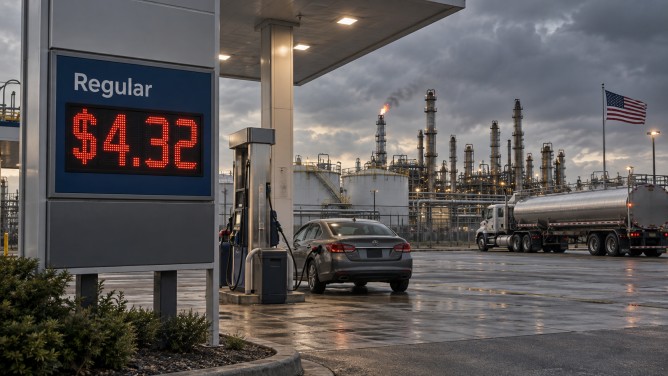
Rising gasoline prices in the United States are squeezing consumers and businesses alike, with the average cost of regular gasoline surging to $4.32 per gallon. This sharp increase is driven by ongoing global oil supply concerns and geopolitical tensions, impacting everything from household budgets to shipping expenses.
The recent spike represents an increase of nearly 25 cents per gallon over the past two weeks, according to the US Energy Information Administration. This is a significant jump compared to the same period last year, when prices hovered around $3.18 per gallon. The escalation in fuel costs is largely attributed to disruptions in the global crude oil market, particularly due to conflicts involving key oil-producing regions like the Middle East, Iran, and Ukraine.
In addition to gasoline, diesel prices have hit record levels, further exacerbating the financial strain on transportation and shipping operations. As diesel is a critical fuel for moving goods, these elevated costs are likely to ripple through the economy, contributing to broader consumer price increases.
Typically, gasoline prices tend to dip in the fall when US refiners switch from the more expensive summer-grade fuel to cheaper winter-grade formulations. However, analysts caution that this seasonal decline may not materialize fully this year, given the persistent geopolitical risks that could maintain upward pressure on prices.
Compounding the issue, the US Strategic Petroleum Reserve is currently less equipped to handle major supply disruptions due to past withdrawals. This leaves the government with fewer options to counteract any additional shocks to the oil supply chain.
As the situation unfolds, energy analysts predict continued volatility in fuel prices, influenced by the evolving dynamics in the Middle East and the Russia-Ukraine conflict. While any seasonal price drop could offer brief respite, the ongoing supply risks suggest that consumers and businesses should brace for potentially sustained high fuel costs.