
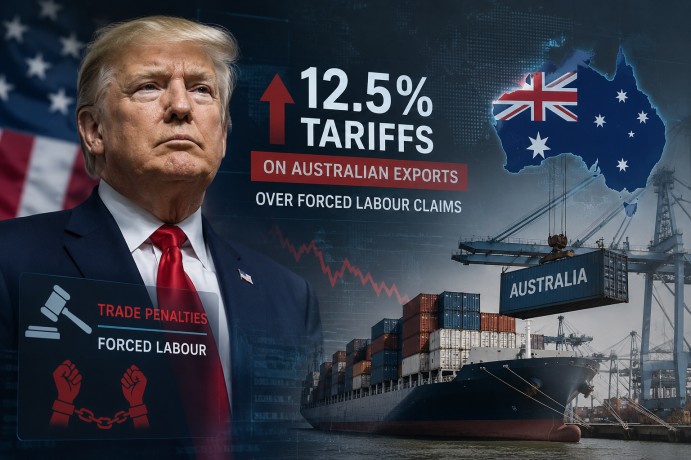
The United States has announced a new 12.5% tariff on numerous Australian exports, citing inadequate measures by Australia to prevent goods produced using forced labor from entering global supply chains. This development has been met with strong opposition from the Australian government, which argues that the tariffs are unjustified and violate the Australia-U.S. Free Trade Agreement. Trade Minister Don Farrell emphasized that Australia has some of the most stringent laws worldwide addressing forced labor and modern slavery, and he has called on Washington to rescind the tariffs immediately.
While the tariffs affect a broad array of Australian exports, certain categories remain unaffected. Notably, beef, gold, several agricultural commodities, aircraft parts, and some mineral and industrial goods are exempt from these new duties. Despite these exemptions, Australian officials have criticized the U.S. decision, arguing that it lacks supporting evidence and could potentially damage bilateral trade relations.
Business groups and industry leaders in Australia have joined the government in condemning the U.S. action. They describe the tariffs as unfair and harmful to exporters who rely heavily on access to the U.S. market. The tariffs come amidst a broader initiative by the Trump administration to expand trade measures that target numerous countries over concerns related to forced labor enforcement.
Australia maintains that its legal framework is robust in combating forced labor and modern slavery, and officials are pressing for a swift resolution to the dispute to prevent further strain on the trading partnership. Meanwhile, industry stakeholders continue to express concern over the potential economic impact of the tariffs on Australian businesses and the broader implications for international trade practices.