
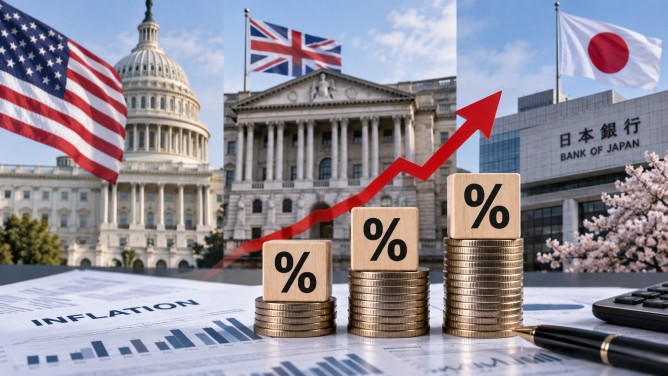
This week’s financial landscape is poised for pivotal changes as central banks in the United States, United Kingdom, and Japan prepare to unveil their latest policy decisions amidst rising energy prices and inflation concerns. The Federal Reserve, in particular, is under scrutiny as surging oil prices threaten to push U.S. inflation even further beyond its 2% target. The recent spike in energy costs correlates with heightened tensions involving Iran and disruptions near the Strait of Hormuz, compounding inflationary pressures.
Recent data indicates that U.S. inflation holds steady at 3.4% annually, significantly above the Federal Reserve’s benchmark. Federal Reserve Chair Kevin Warsh has signaled that further measures might be necessary should inflation not align more closely with the target. Despite President Donald Trump’s continuous advocacy for reduced interest rates, the Federal Reserve is expected to thoroughly assess the inflation risks before concluding its course of action.
Across the Atlantic, the Bank of England is anticipated to maintain its interest rate at 3.75% during its upcoming policy meeting. Factors such as robust economic growth and climbing energy prices have sparked concerns over sustained inflation. Although the rates are likely to remain steady, some members of the Monetary Policy Committee have already shown support for higher rates, indicating a potential shift towards a more aggressive policy stance.
In Japan, a noteworthy decision looms as the Bank of Japan is projected to elevate its policy rate by 0.25 percentage points to 1.25%, marking a level unseen in over thirty years. This expected increase coincides with a strengthening yen, following collaborative measures by Japanese and U.S. authorities to bolster the currency. Meanwhile, the European Central Bank has already acted by raising interest rates, attributing the decision to persistent inflationary pressures partially rooted in ongoing Middle Eastern conflicts.
As global oil prices persist at elevated levels, and bond markets experience renewed volatility, investors are set to closely observe this week’s announcements. The decisions made by these major central banks will provide critical insights into how they intend to navigate the delicate balance between inflationary risks and economic growth.