
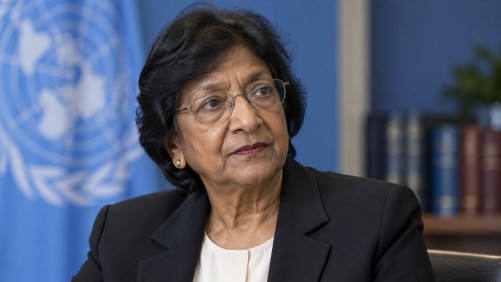
South African jurist Navi Pillay has been awarded the 2026 Nobel Peace Prize for her extensive contributions to human rights and strengthening international law. The Norwegian Nobel Committee acknowledged Pillay’s efforts in promoting peaceful conflict resolution and her dedication to international justice over decades of work.
Pillay’s career has been marked by significant roles, including her tenure as the United Nations High Commissioner for Human Rights and her participation in international criminal tribunals. Her work during South Africa’s apartheid era and her leadership on the UN Independent International Commission of Inquiry on the Occupied Palestinian Territory have also been highlighted. In September 2025, this commission reported that Israel committed genocidal acts in Gaza, a claim Israel denied, accusing the commission of bias and criticizing Pillay following the Nobel announcement.
The Nobel Committee emphasized that Pillay’s career exemplifies how legal institutions and universal legal principles can help prevent violence and resolve conflicts. Her independent and expert approach has been credited with strengthening international law institutions.
Pillay, now 85, was in Nuremberg, Germany, attending a gathering of human rights lawyers and jurists when she learned of the award. She expressed surprise and reiterated the importance of evidence-based legal proceedings. Her career continues to engage with international issues, including involvement in proceedings at the International Court of Justice regarding genocide allegations against Myanmar.
South African President Cyril Ramaphosa praised the Nobel award, highlighting Pillay’s contributions to peace, human dignity, and justice. Other human rights advocates have recognized her role in advancing accountability for serious international crimes, such as genocide and sexual violence.
The Nobel Peace Prize acknowledges Pillay’s lifelong commitment to international law and brings renewed attention to the importance of legal frameworks in safeguarding human rights and addressing global atrocities.