
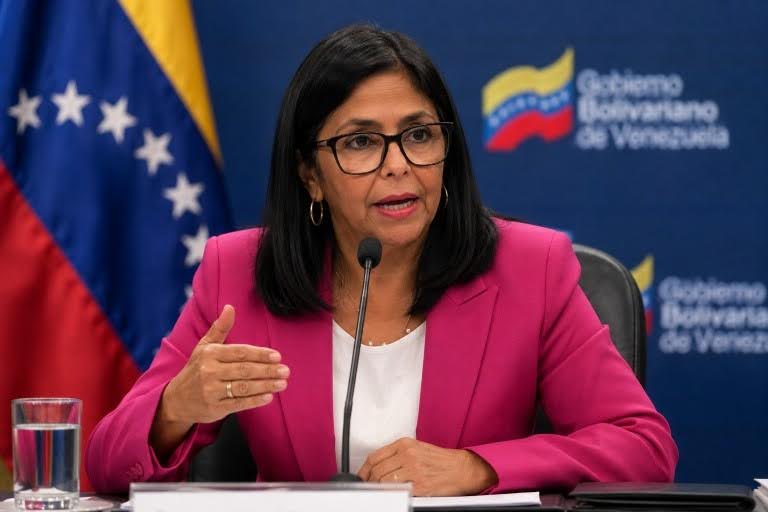
Venezuela’s interim president, Delcy Rodríguez, has staunchly defended a contentious energy agreement with the United States, asserting that the nation will maintain its sovereignty and control over its vast oil reserves. Rodríguez, who assumed leadership earlier this year following the removal of Nicolás Maduro in a U.S.-led operation, addressed the Venezuelan public to dispel accusations that she was capitulating national assets to American interests.
Rodríguez emphasized the agreement’s potential to significantly benefit Venezuela’s economy, projecting that it could generate over $209 billion in revenue and elevate the country to a major energy producer status. She argued that while Venezuela possesses the world’s largest proven oil reserves, surpassing those of Saudi Arabia and Iran, these reserves are of little economic value without the necessary investment, technology, and infrastructure to harness them for national development.
The agreement, reportedly brokered in secrecy over the span of several months, grants the United States a substantial stake in Venezuela’s crude reserves. This deal encompasses 17 key oilfields with a production goal exceeding 1.5 million barrels per day. However, the announcement has sparked considerable backlash, not only from opposition figures but also from within Rodríguez’s political circle. Critics have labeled the deal a “resource grab” and a betrayal of national sovereignty, with a former state oil executive noting that such a transfer of control is unprecedented in Venezuela’s history. Protests erupted in Caracas, with demonstrators denouncing what they see as foreign encroachment, while social media users have ridiculed the agreement by proposing a rebranding of the state oil company.
This move represents a dramatic shift for Rodríguez and her political allies, who have traditionally been vocal opponents of foreign domination over Venezuela’s natural resources. Rodríguez herself has previously issued public statements warning against arrangements akin to this deal. Opposition leaders have raised concerns that the agreement could hinder the restoration of democratic elections in Venezuela. They argue that sustainable economic gains hinge on transparent governance and free elections, without which the deal could rest on an unstable foundation.