
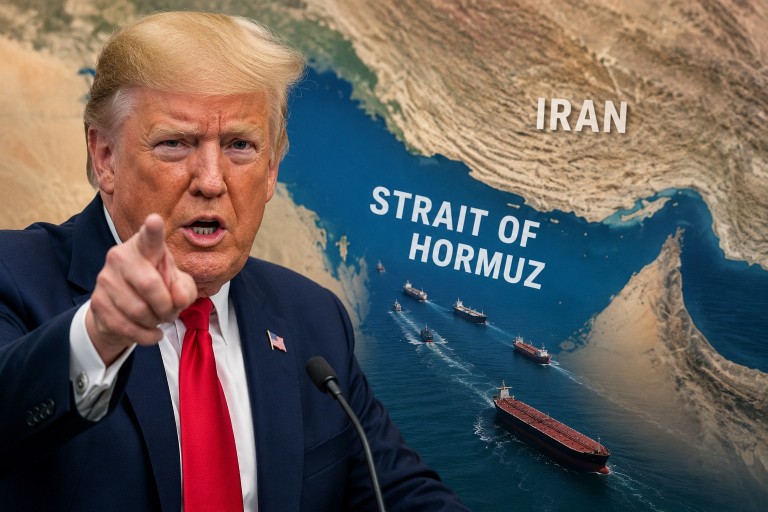
In a significant development, US President Donald Trump has signaled a potential move to declare the Strait of Hormuz as US territory, marking a bold statement amidst ongoing tensions with Iran. During an appearance in New York on Friday, Trump indicated that this declaration could happen “pretty soon” following what he described as a defeat of Iran, asserting that the United States already exercises control over the critical waterway through a military blockade.
The Strait of Hormuz is recognized globally as a crucial maritime passage, responsible for the transit of approximately one-fifth of the world’s seaborne oil supply. This strategic route, located between Iran and Oman, has experienced significant disruptions in the wake of military actions initiated by the US and Israel against Iran. Trump’s remarks have left observers questioning whether this signifies a shift in official US policy or if it serves as a political maneuver.
Iran has firmly rejected the US President’s threat. Kazem Gharibabadi, Iran’s Deputy Foreign Minister, made it clear that Tehran will not succumb to what he described as US pressure tactics, reiterating that the decision to open or close the strait remains under Iranian control. In parallel, Iranian Foreign Minister Abbas Araqchi stated that Tehran has not yet agreed to resume negotiations with Washington, clarifying that current communications through Qatar and Pakistan do not amount to formal talks.
Amidst these tensions, Iran maintains several prerequisites for allowing normal shipping activities to resume through the strait. These include demands for compensation for damages incurred during the conflict, the lifting of economic sanctions, and the release of frozen Iranian assets. The ongoing blockade and conflict have contributed to rising fuel prices, impacting consumers worldwide. President Trump defended the resulting higher prices, framing it as a necessary cost to prevent Iran from developing nuclear weapons.
The persistent standoff in the Strait of Hormuz continues to spark concerns over global energy supplies and the broader economic ramifications of the conflict. As diplomatic efforts remain stalled, the international community watches closely for any shifts in the geopolitical dynamics surrounding this vital shipping corridor.