
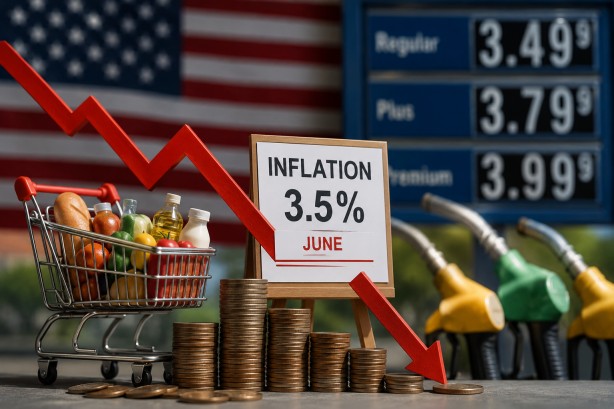
The United States experienced a slowdown in annual inflation, which decreased to 3.5% in June, largely due to a temporary dip in energy prices that eased overall consumer expenses. The latest figures from the Consumer Price Index (CPI) indicate a drop in prices by 0.8% from May, highlighting the significant impact of lower gasoline and fuel costs. These decreases helped to counterbalance the rising prices seen in food, housing, utilities, and other essential goods.
Core inflation, a measure that excludes the volatile categories of food and energy and is closely watched by the Federal Reserve, showed a slight decrease to 2.6% on a year-over-year basis. Despite the recent easing, this may be a short-term relief as rising tensions in the Middle East have contributed to a spike in global oil prices. This increase in crude oil costs has already begun to reflect in higher fuel prices for consumers and elevated operational costs for sectors like aviation and transportation.
The Federal Reserve is set to review this recent inflation data in conjunction with labor market conditions during its forthcoming policy meeting later in the month. Although there has been some moderation in inflation, it remains above the central bank’s long-term target of 2%, leaving open questions about when any potential adjustments to interest rates might occur.