
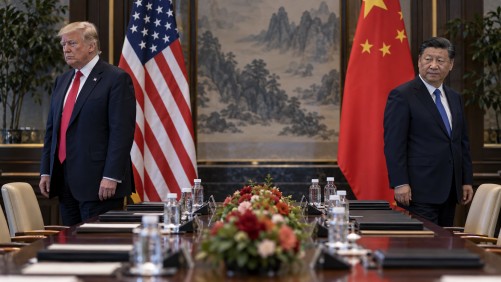
US President Donald Trump and Chinese President Xi Jinping concluded their summit in Washington with no significant progress made on regulating artificial intelligence (AI), a topic of growing international concern. Despite discussions on the rapid development of AI, the leaders did not announce any new agreements or frameworks to manage the technology’s potential risks.
The three-day summit, which marked the first visit by a Chinese president to the White House in over a decade, focused on several issues, including ongoing wars in Iran and Ukraine, as well as Taiwan and trade relations. A key outcome of the meeting was the extension of the existing trade truce between the US and China for another two months.
During the summit, AI was highlighted as a critical issue. President Xi underscored the responsibility of both nations to ensure that AI development remains under human control and advocated for increased cooperation between the US and China. However, despite these discussions, no formal steps were taken towards establishing common safety standards or slowing the development of advanced AI systems.
President Trump emphasized the importance of maintaining the United States’ technological edge over China and expressed his preference for the term “super intelligence” when referring to advanced AI. However, specific details of their discussions on AI were limited.
The summit’s agenda also included a visit to the National Archives, where Trump and Xi viewed significant US founding documents. As the two leaders prepare for future engagements, including the upcoming Asia-Pacific Economic Cooperation summit in China and the G20 summit in the United States, the lack of a major AI agreement remains a notable outcome of their recent meeting.