
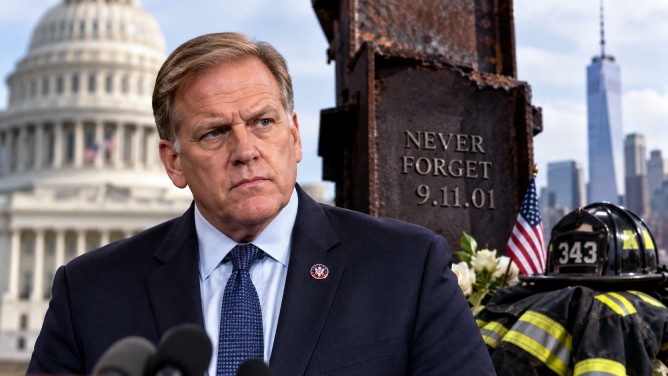
In the race for Michigan’s open Senate seat, Republican candidate Mike Rogers is under renewed scrutiny for his voting record concerning healthcare and benefits for 9/11 first responders and survivors. His critique of Democratic rival Abdul El-Sayed’s past comments on the September 11 attacks has not gone unnoticed, as Rogers draws attention to El-Sayed’s old social media posts, suggesting they show sympathy for the attacks—a claim that has been contested by critics.
Despite Rogers’ focus on El-Sayed, his own record reveals a controversial stance. Congressional records indicate that Rogers voted against the 2010 James Zadroga Act, legislation aimed at funding healthcare and monitoring programs for 9/11 responders and survivors who faced hazardous conditions at Ground Zero. Rogers expressed concerns over the bill’s financial implications for the country, yet the measure successfully passed the House despite his and several other Republicans’ opposition.
Furthermore, Rogers’ voting history shows a pattern of opposition to financial measures supporting veterans and first responders. In 2002, he voted against additional funding for veterans’ healthcare and first responders included in a bill addressing the financial repercussions of 9/11 on New York schools. His record also includes opposition to proposals involving funding, pensions, and other benefits for first responders in subsequent years.
John Feal, a 9/11 responder and advocate for healthcare benefits, has openly criticized Rogers’ stance, labeling his opposition to responder assistance as a betrayal. Feal noted that he had engaged Rogers in discussions regarding the Zadroga Act during its congressional consideration, highlighting the personal nature of the advocacy efforts.
Adding to the controversy, Rogers has been questioned over a claim he made in a campaign email, asserting that he had personally seen Osama bin Laden’s body following the US raid in Pakistan. However, Rogers was not present in Pakistan during the operation, nor was he in the White House Situation Room where senior officials monitored the mission. This unfolding dialogue plays a crucial role in the closely watched contest between Rogers and El-Sayed, a race that could influence the balance of power in Congress.