
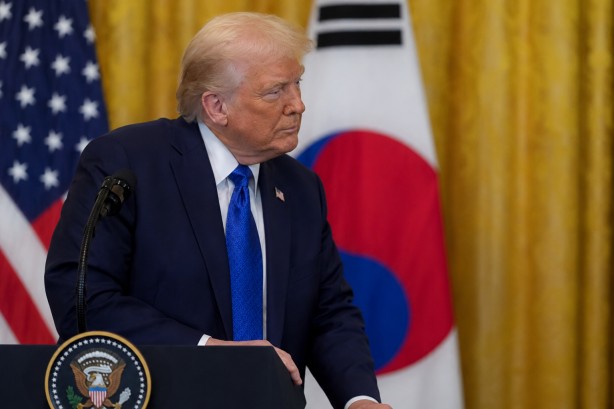
In a recent address at the Pennsylvania Defense and Innovation Summit, President Donald Trump highlighted the potential for South Korean shipbuilders to contribute significantly to the modernization of the U.S. Navy. Emphasizing the necessity of updating the nation’s naval fleet, Trump suggested that collaboration with South Korean companies, among others, could play a key role. This development raises the possibility of the U.S. acquiring naval ships constructed outside its borders, a move that would mark a substantial shift in policy.
As part of these efforts, plans are underway to construct two National Security Multi-Mission Vessels at the Hanwha Philly Shipyard in Philadelphia. This project, valued at approximately $1.5 billion, signifies a tangible step towards enhancing the U.S. naval capabilities. The discussions around this initiative occur in the broader context of strengthening defense ties between the United States and South Korea, a relationship that has seen recent advancements.
South Korean President Lee Jae Myung has disclosed that Trump inquired about South Korea’s ability to rapidly build ten U.S. naval ships, a topic that has been further explored in international meetings. In conjunction with these diplomatic discussions, the Pentagon and the U.S. Navy have reached out to major South Korean shipbuilders, such as HD Hyundai Heavy Industries and Hanwha Ocean, to evaluate their expertise in designing and constructing combat vessels, signaling a growing interest in leveraging South Korean capabilities.
Hanwha is poised to gain from this burgeoning partnership, having acquired shipyard facilities in Philadelphia in 2024 and actively seeking licenses to produce military ships within the U.S. Meanwhile, HD Hyundai and Samsung Heavy Industries have been forging alliances with American firms to penetrate the U.S. naval shipbuilding sector. Despite these promising developments, the path forward is complicated by existing U.S. regulations that restrict the construction of Navy vessels overseas, indicating that any shift in production location would necessitate legislative changes or special exemptions.